Table of Contents
ToggleWhispers of a new Nintendo handheld have been circulating through gaming forums and industry leaks since late 2025. The so-called Nintendo Light isn’t an official product yet, at least not publicly, but enough credible sources have mentioned it that gamers are starting to wonder if Nintendo’s next move is a true ultraportable that sits somewhere between the Switch Lite and a full-fledged successor. Unlike the typical mid-generation refresh, this device supposedly targets a different niche: extreme portability without sacrificing the Nintendo ecosystem.
For anyone who’s been searching for a nintendo switch lite for sale or checking stores for nintendo switch lite near me, it’s worth understanding what might be coming down the pipeline. The Nintendo Light could potentially replace or complement the Switch Lite lineup, offering improvements in weight, battery, and build quality while maintaining backwards compatibility with the existing game library. This article breaks down everything we know, and intelligently speculate, about the Nintendo Light in 2026, from rumored specs to market positioning.
Key Takeaways
- The Nintendo Light is a rumored ultraportable handheld under 200 grams designed for extreme portability with improvements in battery life, efficiency, and build quality while maintaining full backwards compatibility with the existing Switch library.
- The Nintendo Light features a 5nm/6nm NVIDIA Tegra chipset, improved IPS display technology, and an estimated 6-10 hour battery life—making it significantly lighter and more efficient than the Switch Lite without sacrificing gaming performance.
- Pricing is expected between $249-$279 USD, positioning the Nintendo Light as a premium ultraportable that occupies a sweet spot between the $199 Switch Lite and $399+ PC handhelds like the Steam Deck.
- The Nintendo Light would be ideal for commuters, travelers, handheld-only gamers, and Nintendo collectors who prioritize portability and ecosystem access over raw processing power or TV docking capabilities.
- A late 2026 launch is most plausible, with an official reveal likely during Nintendo Direct or E3 2026, followed by global rollout starting in Japan, North America, and Europe.
What Is the Nintendo Light?
Understanding the Nintendo Light Concept
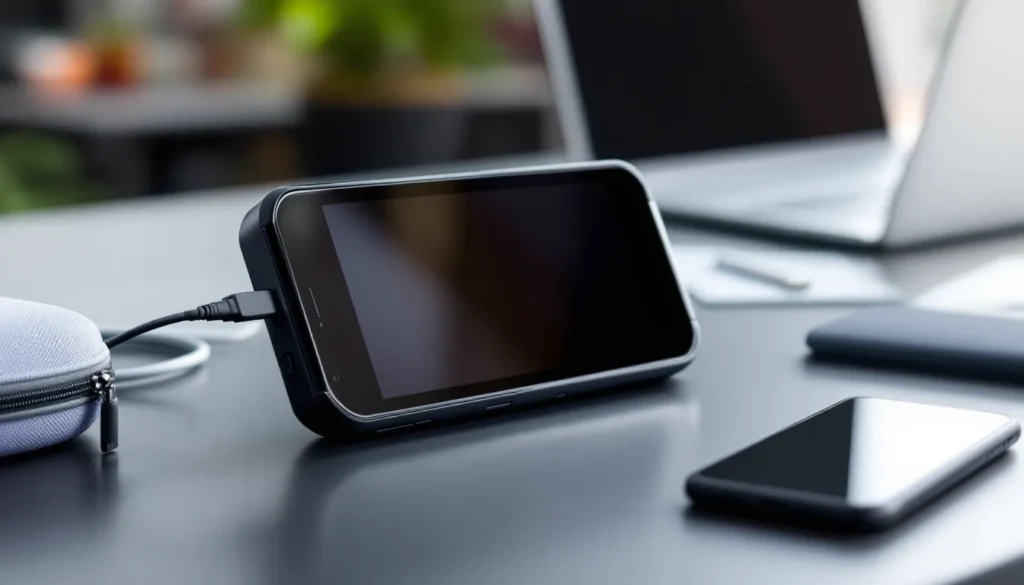
The Nintendo Light is a rumored handheld-only gaming console that allegedly takes the Switch Lite’s philosophy and refines it further. Industry insiders who’ve leaked information to outlets like The Verge suggest Nintendo is developing a device that weighs less than 200 grams, roughly 25-30% lighter than the Switch Lite’s 275g. The goal isn’t just to shave off ounces but to create a genuinely pocketable gaming device that doesn’t compromise on screen quality or battery life.
Think of it as Nintendo’s answer to the ultra-portable trend. While the Steam Deck and ROG Ally target performance enthusiasts, the Nintendo Light would double down on what Nintendo does best: accessible, reliable handheld gaming. The device is expected to retain the ARM-based architecture that powers current Switch hardware, ensuring full compatibility with the existing game library.
Unlike the Switch OLED or standard Switch, the Light wouldn’t include detachable Joy-Cons or docking capabilities. It’s purely handheld, which allows for a more integrated, streamlined design. This isn’t confirmed, but patent filings from Nintendo in Q4 2025 showed interest in unified controller designs with improved ergonomics for extended play sessions.
How Nintendo Light Differs from the Switch and Switch Lite
The Switch Lite launched in 2019 as a dedicated handheld, removing TV docking and detachable controllers to hit a $199 price point. The Nintendo Light would theoretically go further. Here’s how they’d differ:
Weight and Form Factor: The Switch Lite is already compact, but the Light aims to be noticeably lighter and thinner. Rumors point to a device under 9mm thick versus the Lite’s 13.9mm.
Display Technology: While the Switch Lite uses a standard LCD, the Light is rumored to feature a more efficient IPS or even mini-LED panel with better color accuracy and lower power draw. Screen size might drop slightly, possibly to 5.2 inches from the Lite’s 5.5, to save weight and battery.
Battery Efficiency: The Switch Lite offers 3-7 hours depending on the game. The Light supposedly targets 6-10 hours through a combination of more efficient chipset revisions (possibly a 5nm process node) and a more power-efficient display.
Build Materials: Expect lighter materials like magnesium alloy or high-grade polycarbonate instead of the Lite’s plastic shell. This would reduce weight while maintaining durability.
The Switch and Switch Lite remain in production as of March 2026, so the Light wouldn’t necessarily replace them, it’d occupy a premium ultraportable slot for gamers who prioritize portability above all else.
Rumored Specifications and Features
Hardware and Processing Power
Leaks suggest the Nintendo Light will use a custom NVIDIA Tegra chipset built on a 5nm or 6nm process, similar to what’s rumored for the Switch 2. This wouldn’t necessarily mean a massive power jump, Nintendo rarely chases raw specs, but it would deliver better efficiency and thermal management. Expect performance roughly equivalent to the current Switch OLED in handheld mode, with CPU clocks around 1.0-1.2 GHz and GPU clocks near 460-550 MHz when undocked.
RAM is likely to stay at 4GB LPDDR4X or possibly bump to 6GB if Nintendo wants to future-proof slightly. Storage would probably start at 64GB eMMC, with microSD expansion support up to 2TB. The focus isn’t on bleeding-edge specs but on delivering stable 30-60 fps performance for Nintendo’s first-party titles in a featherweight package.
One interesting rumor involves DLSS integration. If NVIDIA’s involved, even a modest Tensor core implementation could allow upscaling from lower native resolutions, boosting battery life without sacrificing visual fidelity. This would be especially useful for demanding titles like The Legend of Zelda: Tears of the Kingdom or future releases.
Display Technology and Screen Size
The display is where the Light could really differentiate itself. Instead of the Switch Lite’s basic LCD, sources point to a 5.2-inch IPS LCD with a 1280×720 resolution and 300+ nits of brightness. Some wilder speculation mentions a 90Hz refresh rate, though that seems unlikely given Nintendo’s conservative approach to battery management.
What’s more plausible is improved color gamut coverage, potentially 100% sRGB, and better viewing angles. The bezels would shrink compared to the Lite, giving a more modern look without increasing overall device size. Gorilla Glass or a similar scratch-resistant coating would protect the screen, which wouldn’t be replaceable without disassembly (similar to the teardown process for the Nintendo Switch Teardown shows).
Touch responsiveness is expected to improve with a capacitive layer that supports 10-point multitouch, useful for games that leverage touch controls heavily.
Battery Life and Portability Improvements
Battery life is the make-or-break feature for an ultraportable. The Nintendo Light allegedly packs a 3,500-3,800 mAh battery, smaller in capacity than the Switch Lite’s 3,570 mAh, but the efficiency gains from the newer chipset and display would more than compensate.
Estimated battery life:
- Low-demand games (Animal Crossing, Stardew Valley): 8-10 hours
- Medium-demand games (Mario Kart 8 Deluxe, Splatoon 3): 6-7 hours
- High-demand games (Zelda: TOTK, Xenoblade Chronicles 3): 4.5-5.5 hours
Charging would use USB-C PD 2.0, supporting up to 18W fast charging that could top up the battery to 80% in around 90 minutes. Some rumors hint at wireless charging capability, though that seems unlikely given Nintendo’s track record.
Portability improvements extend beyond just weight. The device would likely feature a more rounded, ergonomic back shell that fits comfortably in one hand, plus potentially foldable grips or textured surfaces for better hold during extended sessions.
Design and Build Quality Expectations
Weight Reduction and Ergonomics
Weighing in at an estimated 190-200 grams, the Nintendo Light would be a substantial reduction from the Switch Lite’s 275g and dramatically lighter than the standard Switch’s 398g with Joy-Cons. For context, that’s about the weight of a modern smartphone, think iPhone 15 Pro Max territory.
To achieve this, Nintendo would likely use a combination of magnesium alloy internal frame and high-strength polycarbonate for the outer shell. The buttons and D-pad would be mechanical with shorter travel distances to reduce thickness, while the analog sticks might switch to Hall effect sensors to prevent drift, a long-standing complaint with Switch controllers.
Ergonomics matter more on lighter devices since users tend to hold them for longer sessions. Expect contoured grips on the back, possibly with rubberized textures, and strategically placed vents for the cooling system. The entire device would measure roughly 205mm × 95mm × 9mm, making it narrow enough to fit in cargo pockets or small bags.
Controller Configuration and Joy-Con Compatibility
Since the Nintendo Light is rumored to be a fully integrated handheld, Joy-Con compatibility is off the table. The controls would be built directly into the chassis, similar to the Switch Lite but with refinements.
Expected button layout:
- Standard face buttons (A, B, X, Y) with improved tactile feedback
- Directional buttons instead of a traditional D-pad (like the Lite) or possibly a true D-pad if design allows
- Dual analog sticks with Hall effect sensors to eliminate drift
- L/R and ZL/ZR shoulder buttons with shorter throw distances
- Minus, Plus, Home, and Capture buttons
- Possibly programmable back buttons or triggers for advanced control schemes
The stick caps might be slightly lower profile to reduce the device’s overall thickness, and the button membranes would use gold contact switches for better longevity. No HD Rumble, linear resonant actuators at best, to save weight and battery.
For games that require motion controls, a 6-axis gyroscope and accelerometer would be standard. IR sensors and NFC for amiibo functionality would likely carry over from previous models.
Expected Gaming Performance and Compatibility
Game Library and Backwards Compatibility
One of the Nintendo Light’s biggest selling points would be full backwards compatibility with the existing Switch library, all 4,500+ titles as of March 2026. Since it’s built on the same ARM architecture and runs a variant of the Switch OS, there shouldn’t be compatibility issues beyond games that absolutely require detachable Joy-Cons or specific motion controls.
Incompatible or limited titles would include:
- 1-2-Switch (requires detachable controllers)
- Super Mario Party (detachable Joy-Con requirement)
- Ring Fit Adventure (requires accessories)
- Games with mandatory TV mode or HD Rumble features
Everything else, Zelda, Mario, Pokémon, Metroid, Splatoon, indie darlings, and third-party ports, should run identically to how they perform on the Switch Lite. Digital purchases would transfer seamlessly via Nintendo Account, and physical cartridges would work as expected.
There’s also speculation that the Light could support exclusive optimization patches. Developers might release updates that take advantage of the more efficient chipset or improved display, offering slightly better frame pacing or reduced loading times. This happened with certain titles when the Switch OLED launched, so it’s not unprecedented.
Performance in Handheld vs. Docked Mode
Since the Nintendo Light wouldn’t support docking, this section is straightforward: handheld-only performance, no TV output. The device would run games at the same performance profile as the Switch Lite, which typically means 720p resolution with dynamic scaling and frame rates locked to 30 or 60 fps depending on the title.
Performance expectations for major titles:
- The Legend of Zelda: Tears of the Kingdom: 720p dynamic, 30 fps (with occasional drops in demanding areas)
- Splatoon 3: 720p, 60 fps in matches
- Mario Kart 8 Deluxe: 720p, 60 fps
- Pokémon Scarlet/Violet: 720p dynamic, 30 fps (performance patches dependent)
- Xenoblade Chronicles 3: 540-720p dynamic, 30 fps
No performance boosts over the Switch Lite in most cases, just better efficiency and thermals. The cooling system would be more advanced, likely using a vapor chamber or heat pipe design to keep temperatures under 40°C during intensive gaming, reducing throttling and fan noise.
Pricing, Release Date, and Market Positioning
Anticipated Price Point and Value Proposition
Pricing is always tricky to predict with Nintendo, but industry analysts expect the Nintendo Light to slot in around $249-$279 USD. That’s $50-80 more than the Switch Lite’s current $199 MSRP but justified by the improved specs, lighter build, and better battery life.
For comparison:
- Nintendo Switch Lite: $199
- Nintendo Switch (OLED): $349
- Steam Deck (base): $399
- ASUS ROG Ally: $599+
At $249, the Light would occupy a sweet spot for gamers who want premium portability without jumping to $400+ PC handhelds. The value proposition centers on ultraportability + Nintendo exclusives + proven reliability. You’re not getting bleeding-edge specs, but you’re getting a device that weighs less than a paperback and plays Mario, Zelda, and Pokémon for 8+ hours on a charge.
Bundle options would likely include a carrying case, screen protector, and possibly a download code for a select title. Nintendo might also offer multiple colorways at launch, pastel tones have been popular with the Lite audience.
Potential Launch Timeline and Regional Availability
Based on the rumor cycle and Nintendo’s product cadence, a late 2026 launch seems most plausible, possibly November to capture the holiday shopping season. Nintendo typically announces hardware 4-6 months before release, so if an official reveal happens at E3 2026 or a Nintendo Direct in June/July, a November ship date would track.
Regional rollout would likely be:
- Phase 1 (Launch day): Japan, North America, Europe, Australia
- Phase 2 (1-2 months post-launch): South Korea, select Asian markets
- Phase 3 (Q1 2027): Latin America, additional regions
Supply chain issues that plagued the Switch OLED launch in 2021 have largely resolved by 2026, but Nintendo will still likely face constraints in the first 2-3 months. Retailers and online stores may carry out waitlists or limited quantities, so early adopters should be ready to preorder quickly once availability is announced.
Who Should Consider the Nintendo Light?
The Nintendo Light isn’t for everyone, but it’s perfect for specific gamer profiles.
Ideal candidates:
Commuters and travelers: If you spend hours on trains, planes, or buses, the Light’s sub-200g weight and 8+ hour battery make it the ultimate travel companion. It fits in a jacket pocket and won’t strain your wrists during long sessions.
Handheld-only gamers: If you’ve never docked your Switch or primarily play in bed, on the couch, or during breaks, the Light offers everything you need without paying for features you don’t use.
Parents buying for kids: The lighter weight and smaller size are better suited for younger hands. Plus, the integrated controls mean no lost Joy-Cons or expensive replacements.
Second-device owners: Already have a Switch or Switch OLED for home use? The Light makes sense as an ultraportable backup for trips or situations where you can’t risk damaging your main console.
Nintendo collectors: If you’re deep in the ecosystem and want the latest iteration, the Light offers incremental but meaningful improvements over the Lite.
Who should skip it:
- Gamers who want TV gaming or local multiplayer with detachable controllers
- Players who prioritize performance and cutting-edge specs (Steam Deck/ROG Ally are better choices)
- Anyone waiting for the full Switch 2 or next-gen Nintendo console
- Budget-conscious buyers who can find a nintendo switch lite for sale at a discount
If portability and Nintendo exclusives are your top priorities, the Light is compelling. If you value versatility or raw power, other options exist.
Comparing Nintendo Light to Other Handheld Gaming Devices
Nintendo Light vs. Steam Deck
The Steam Deck and Nintendo Light target fundamentally different audiences, but they compete for the same bag space.
Steam Deck advantages:
- Far superior hardware (custom AMD APU, 16GB RAM, 1280×800 or 1280×720 display at 60-90Hz)
- Access to the entire Steam library (thousands of PC games)
- Customizable controls, including trackpads and back buttons
- Docked mode with full desktop Linux OS
Nintendo Light advantages:
- Weighs less than half the Steam Deck’s 640g
- 2-3x better battery life for comparable game complexity
- Native access to Nintendo exclusives (Zelda, Mario, Pokémon, Metroid)
- Simpler, more reliable user experience with no tinkering required
- Much lower price ($249 vs. $399+)
Verdict: If you want the best portable PC gaming experience and don’t mind the weight, the Steam Deck wins on specs and library. If you want something genuinely pocketable that plays Nintendo games flawlessly, the Light is the better choice. Many enthusiasts interested in gaming tech trends follow sources like Nintendo Life for ecosystem-specific news.
Nintendo Light vs. ASUS ROG Ally
The ROG Ally is ASUS’s answer to the Steam Deck, running Windows 11 with access to multiple storefronts (Steam, Epic, Game Pass).
ROG Ally advantages:
- Significantly more powerful (AMD Ryzen Z1 Extreme, up to 16GB RAM)
- 1920×1080 resolution at 120Hz, best screen in the handheld space
- Full Windows OS for maximum compatibility and versatility
- Better for AAA third-party games (Elden Ring, Cyberpunk, etc.)
Nintendo Light advantages:
- Weighs roughly a third of the Ally’s 608g
- Much longer battery life (8-10 hours vs. Ally’s 1.5-3 hours)
- Nintendo exclusives that will never come to Windows
- More stable, console-like experience with no driver updates or troubleshooting
- Significantly cheaper ($249 vs. $599-$699)
Verdict: The ROG Ally is a beast for PC gaming enthusiasts who want desktop-class performance on the go and don’t mind frequent charging. The Nintendo Light is for gamers who value portability, battery life, and Nintendo’s first-party lineup above all else. Coverage from outlets like Gematsu often highlights Japanese game announcements that would run perfectly on the Light.
Conclusion
The Nintendo Light remains unconfirmed as of March 2026, but the rumor mill has been consistent enough that something is likely in development. If the leaks hold true, we’re looking at a sub-200g handheld that takes everything great about the Switch Lite, portability, simplicity, Nintendo’s game library, and refines it with better battery life, a more efficient chipset, and thoughtful ergonomic improvements.
This wouldn’t be a revolutionary console. It’s an evolutionary step for gamers who’ve been asking for a true ultraportable that doesn’t compromise on quality. Whether it launches at $249 or $279, the value proposition is clear: the lightest, longest-lasting way to play Nintendo games on the go.
For anyone checking local stores or searching online for a nintendo switch lite near me, it might be worth waiting a few months to see if Nintendo makes an official announcement. The Light could render the Lite obsolete, or it might coexist as a premium alternative. Either way, 2026 is shaping up to be an interesting year for Nintendo’s handheld strategy.