Table of Contents
ToggleThe Cooking Mama series has been serving up bite-sized cooking fun since 2006, and the Nintendo Switch has become its natural home. Whether you’re a longtime fan or curious about what this quirky culinary franchise offers, the Switch delivers the most accessible and feature-complete experience yet. With motion controls, portability, and multiple titles available, it’s easier than ever to fire up the virtual kitchen and chase those perfect scores.
But here’s the thing: not all Cooking Mama games on Switch are created equal. From the controversial Cookstar launch to the more polished Cuisine., understanding what each title brings to the table is crucial before you drop your cash. This guide breaks down everything you need to know about Cooking Mama on Switch in 2026, which games to buy, how to master the mechanics, and whether this lighthearted cooking sim still holds up against the competition.
Key Takeaways
- Cooking Mama on Nintendo Switch offers the most accessible and feature-complete experience in the franchise, with motion controls and portability perfectly suited to the platform’s design.
- Cooking Mama: Cuisine. is the recommended entry point with 90+ international recipes and refined controls, while Cookstar is worth considering only on deep discount due to its smaller content library and controversial launch history.
- The series excels for casual gamers and families with low-commitment gameplay sessions, intuitive controls suitable for all ages, and local multiplayer modes that encourage friendly competition without frustration.
- Perfect scores in Cooking Mama require precise timing and steady hand control—understanding visual cues for chopping, maintaining smooth circular motions for stirring, and making incremental temperature adjustments to earn Gold medals.
- Cooking Mama stands apart from other Switch cooking games by focusing on individual recipe mastery and pick-up-and-play accessibility rather than the multiplayer chaos of Overcooked. or the business simulation depth of Good Pizza, Great Pizza.
What Is Cooking Mama and Why It’s Perfect for Switch
Overview of the Cooking Mama Franchise
Cooking Mama is a long-running cooking simulation series that transforms meal preparation into a collection of fast-paced mini-games. Players chop, stir, flip, and season their way through dozens of recipes, guided by the cheerful (and sometimes stern) Mama herself. The franchise spans multiple platforms and generations, with over 30 million copies sold worldwide since its DS debut.
At its core, the series thrives on simple, satisfying mechanics. Each recipe breaks down into individual steps, dicing onions, cracking eggs, monitoring cooking temperatures, that test your timing and precision. The appeal isn’t complexity: it’s the dopamine hit of nailing a perfect chop or getting that three-star rating. It’s gaming comfort food.
The series has evolved over the years, adding crafting mini-games, gardening elements, and even outdoor cooking scenarios. But the formula remains consistent: short, repeatable challenges that reward muscle memory and quick reflexes. It’s never tried to be a serious cooking sim, and that’s exactly why it works.
Why the Nintendo Switch Is the Ideal Platform
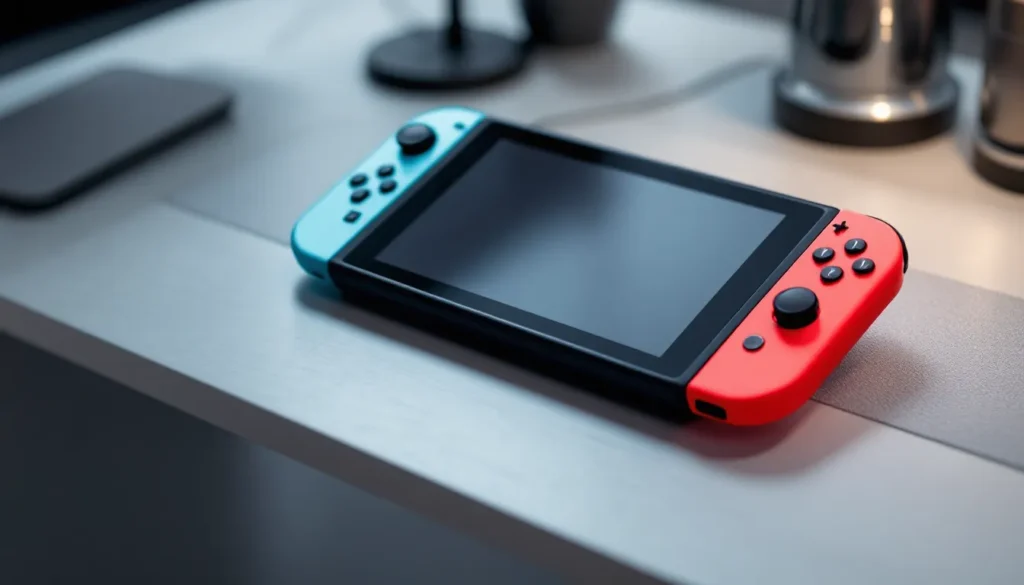
The Switch’s hardware feels tailor-made for Cooking Mama’s gameplay loop. The Joy-Con motion controls replicate the physical actions of cooking, shaking to mix ingredients, tilting to pour liquids, flicking to flip pancakes. It’s more intuitive than button inputs and adds a tactile layer that makes each mini-game feel interactive rather than abstract.
Portability is the second major advantage. Cooking Mama thrives in short bursts, making it perfect for handheld sessions during commutes or quick play breaks. You can knock out a recipe in under two minutes, making it one of the most pick-up-and-play-friendly titles on the system.
The Switch also supports both solo and multiplayer configurations without extra hardware. Pass a Joy-Con to a friend or family member, and you’ve got instant co-op cooking. For a series that’s always been family-friendly, the Switch’s flexible control options and accessibility make it the definitive platform for the franchise in 2026.
All Cooking Mama Games Available on Nintendo Switch
Cooking Mama: Cookstar
Cooking Mama: Cookstar launched in March 2020 amid significant controversy. The game was pulled from digital storefronts shortly after release due to licensing disputes between publisher Planet Entertainment and IP holder Office Create. Physical copies became scarce, and rumors swirled about everything from blockchain mining to quality issues (most of which were exaggerated or false).
Once the dust settled, Cookstar returned to availability in late 2020. The game features over 30 recipes across various cuisines, including vegetarian options, a series first. Motion controls work as expected, though some mini-games feel less responsive than earlier entries. The visual style received a minor facelift, with more detailed food models and environments.
Cookstar’s main issues stem from pacing and variety. The recipe selection feels smaller than previous mainline entries, and unlocking new content can feel grindy. It’s not a bad game, but it launched rough and never fully recovered its reputation. If you’re curious, physical copies hover around $30-$40 on secondary markets, while digital versions retail for $39.99 on the eShop when available.
Cooking Mama: Cuisine.
Cooking Mama: Cuisine. dropped in 2021 as a redemption arc for the series on Switch. It’s the more polished, feature-complete experience that Cookstar should’ve been. With over 90 recipes spanning international cuisines, from Italian pasta to Japanese ramen, there’s substantially more content to unlock and master.
Cuisine. refines the control scheme, offering smoother motion inputs and better feedback during mini-games. The game also introduces a more robust progression system, where completing recipes earns currency to unlock kitchen upgrades, new ingredients, and cosmetic items. It’s still lighthearted and accessible, but there’s enough depth to keep players engaged beyond the first few hours.
Multiplayer modes received an upgrade here as well. Co-op cooking supports up to two players locally, with competitive modes that pit chefs against each other in timed challenges. It’s nothing groundbreaking, but it adds replayability for families or friend groups looking for casual competition.
Cuisine. retails for $39.99 digitally and physically, with frequent sales dropping it to $19.99-$29.99. As of 2026, it’s the recommended entry point for anyone new to the series on Switch.
Digital vs. Physical Editions: What to Know
Both Cookstar and Cuisine. are available in digital and physical formats, though availability varies. Physical copies of Cookstar are harder to find due to the initial recall, while Cuisine. has steady stock at most major retailers and online storefronts.
Digital versions offer convenience and immediate access, but physical copies retain resale value, especially for Cookstar, which has become something of a collector’s curiosity. File sizes are modest (under 2GB for both titles), so digital purchases won’t eat into your Switch storage significantly.
One advantage of physical: no delisting risk. Given Cookstar’s messy launch history, having a cartridge means you’ll always have access regardless of future licensing drama. For Cuisine., either format works fine, though sales on physical copies tend to be steeper than eShop discounts.
Gameplay Mechanics and Features Explained
Core Cooking Mini-Games and Controls
Each recipe in Cooking Mama breaks down into a sequence of mini-games representing individual cooking steps. You’ll chop vegetables by timing downward swipes, stir batter with circular motions, flip ingredients by flicking the Joy-Con upward, and monitor cooking temps by watching on-screen gauges. The mechanics are intuitive but demand precision, sloppy inputs result in burnt food or failed steps.
The grading system rates each mini-game from Bronze to Gold, with an overall recipe score determining your final rank. Gold medals require near-perfect execution: timed chops within tight windows, smooth stirring without overshooting, and temperature control that never dips into the red. It’s surprisingly demanding for a game that looks this cheerful.
Button controls are available as an alternative to motion inputs, which helps for handheld-only play or players who find motion controls finicky. But, the game is clearly designed around motion, button inputs feel like a compromise rather than the primary experience.
Recipe Unlocking and Progression System
Both Cookstar and Cuisine. gate content behind progression, though the systems differ slightly. In Cookstar, you unlock new recipes by completing existing ones and earning stars. The pacing is slower, with significant gaps between unlocks that can feel tedious.
Cuisine. streamlines this with a currency-based system. Completing recipes and achieving high scores earns coins, which you spend to unlock new dishes, kitchen decorations, and cosmetic items. It’s more flexible and lets you prioritize the content you want rather than following a rigid unlock path.
Also, both games feature challenge modes that remix existing recipes with stricter time limits or randomized ingredients. These modes are where experienced players will spend most of their time chasing leaderboard positions or personal bests.
Multiplayer and Co-Op Modes
Local multiplayer is the only option, there’s no online play in either Switch title. Co-op mode lets two players tackle recipes together, with each player handling specific mini-games in sequence or simultaneously for certain steps. It’s best suited for parent-child or casual friend sessions rather than competitive play.
Versus mode puts players head-to-head in timed cooking challenges. Whoever completes their dish fastest (or with the highest quality) wins. It’s simple but effective for short bursts of competition, though the lack of variety in versus-specific recipes limits replayability.
Some gamers prefer action-packed multiplayer experiences, but Cooking Mama’s co-op is tailored for low-stakes, family-friendly fun. Don’t expect the strategic depth of team-based shooters, this is about passing Joy-Cons and laughing when someone burns the pancakes.
Tips and Strategies for Mastering Cooking Mama
How to Achieve Perfect Scores on Every Recipe
Gold medals require understanding each mini-game’s timing windows and visual cues. For chopping tasks, wait until the knife icon aligns perfectly with the ingredient’s center before slicing. Early or late inputs drop you to Silver or Bronze immediately.
Stirring mini-games demand smooth, consistent circular motions. Jerky or erratic movements reduce your score, even if you complete the required rotations. Practice maintaining steady speed rather than rushing, the game rewards rhythm over speed.
Temperature-based challenges are all about attention. Don’t multitask during these, watch the gauge and adjust heat incrementally. Overcorrecting causes wild swings that tank your score. Small, frequent adjustments keep temps stable in the Gold range.
For flipping and tossing actions, the key is wrist control. A sharp, controlled flick works better than a full arm motion. Think flicking a light switch rather than throwing a baseball.
Unlocking Hidden Recipes and Content
Both games hide bonus recipes behind specific unlock conditions. In Cookstar, achieving Gold medals on all recipes within a cuisine category unlocks a “Master Recipe” for that category. These tend to be more complex, multi-step dishes that combine techniques from earlier recipes.
Cuisine. takes a different approach with seasonal and holiday-themed recipes that unlock by playing during specific calendar periods. If you missed a seasonal unlock window, you can typically access it by adjusting your Switch’s system clock, a harmless workaround the game doesn’t penalize.
Some recipes also require experimenting with ingredient substitutions. If a recipe allows customization (indicated by a selectable ingredient icon), try swapping in unusual options. Certain combinations unlock “secret” variations that don’t appear in the standard recipe list.
Making the Most of Motion Controls
Motion controls are Cooking Mama’s signature, but they need calibration. If inputs feel off, recalibrate your Joy-Cons through the Switch’s system settings. Drift or miscalibration will wreck your scores faster than any mechanical mistake.
When using tabletop or TV mode, sit or stand at a comfortable distance where you have full range of motion without hitting furniture or other people. Cramped spaces lead to hesitant inputs that the game reads as mistakes.
For handheld mode, you’re limited to gyro tilting and some button-based alternatives. The experience isn’t as immersive, but it’s functional for grinding out recipes during commutes. Just don’t expect to hit Gold medals as consistently without detached Joy-Cons.
If motion controls frustrate you after multiple attempts, switch to button inputs for specific mini-games. You can toggle control schemes mid-recipe in both games, which helps when one particular step refuses to cooperate with motion inputs. Players looking for alternatives to motion-heavy games might enjoy other Switch titles with more traditional control schemes.
Who Should Play Cooking Mama on Switch?
Best for Casual Gamers and Families
Cooking Mama is built for players who want low-commitment, high-reward gameplay. Sessions can last anywhere from two minutes to an hour, making it perfect for gamers with unpredictable schedules or those looking to unwind without heavy narrative or strategic investment.
The series excels in family environments. The content is universally appropriate, the controls are simple enough for young kids to grasp, and the competitive modes encourage friendly rivalry without frustration. It’s one of the few franchises where skill gaps between players don’t ruin the fun, a parent and a six-year-old can both enjoy chopping vegetables, even if the parent’s scores are higher.
The accessibility extends to non-gamers, too. People who don’t normally play video games find Cooking Mama’s real-world cooking parallels intuitive. It’s a solid gateway title for introducing someone to gaming without overwhelming them with complex mechanics or controls.
Educational Value for Younger Players
While Cooking Mama isn’t marketed as an educational game, it teaches basic cooking concepts and kitchen safety through gameplay. Kids learn ingredient identification, sequencing (recipe steps must follow logical order), and the importance of timing and precision in cooking.
The games also reinforce fine motor skills and hand-eye coordination. The mini-games demand controlled, deliberate movements rather than button-mashing, which helps younger players develop dexterity. For parents looking to combine screen time with skill-building, Cooking Mama offers more value than passive entertainment.
Some recipes include brief factoids about ingredients or cooking techniques, though the educational content is light and never feels forced. It’s a nice bonus rather than a core feature, but it adds a layer of learning that parents appreciate. According to Twinfinite, many family-oriented games on Switch incorporate similar light educational elements that parents value.
Comparing Cooking Mama to Other Cooking Games on Switch
The Switch has no shortage of cooking games, but few target the same audience or gameplay style as Cooking Mama. Overcooked. 2 is the most common comparison, but it’s fundamentally different, a frantic, multiplayer-focused co-op game that prioritizes teamwork and chaos over precision cooking. Overcooked demands communication and coordination: Cooking Mama is a solo-friendly, bite-sized experience.
Good Pizza, Great Pizza leans into management and customer service mechanics, turning pizza-making into a business sim with narrative elements. It’s deeper and more strategic than Cooking Mama but lacks the tactile mini-game focus. If you want to manage a restaurant empire, Good Pizza delivers. If you want to perfect a virtual omelette, Cooking Mama is your game.
Cooking Simulator attempts photorealistic cooking with complex physics and kitchen mechanics. It’s closer to a serious simulation than a casual game, which makes it inaccessible for younger players or anyone looking for relaxed, pick-up-and-play fun. The learning curve is steep, and mistakes are punishing, polar opposite of Cooking Mama’s forgiving, arcade-style approach.
Cake Bash and Candle Knight occupy the party game space with competitive cooking mini-games. They’re fun in group settings but lack the solo content and progression systems that give Cooking Mama its longevity. Reviews on Metacritic consistently highlight Cooking Mama’s broader appeal for single-player sessions.
Cooking Mama carves out its niche by being accessible, portable, and focused on individual recipe mastery rather than kitchen management or multiplayer chaos. For players seeking similar experiences on Nintendo’s platform, the Cooking Mama series remains the gold standard for casual culinary gaming. It’s not trying to compete with the intensity of Overcooked or the depth of simulators, it’s doing its own thing, and doing it well.
Is Cooking Mama Worth Buying in 2026?
Pros and Cons of Each Switch Title
Cooking Mama: Cookstar has a few things going for it: it’s often cheaper than Cuisine. on sale, and the vegetarian recipe focus is unique within the series. But, the smaller recipe count, rougher polish, and lingering controversy from its launch make it a tough sell unless you find it heavily discounted.
Pros of Cookstar:
- Vegetarian-friendly recipe selection
- Typically $10-$20 cheaper during sales
- Functional motion controls even though early criticism
Cons of Cookstar:
- Fewer recipes than Cuisine. (30 vs. 90+)
- Slower progression system
- Controversial launch and limited availability
Cooking Mama: Cuisine. is the clear winner for most players. The expanded recipe library, smoother controls, and improved progression make it worth the extra cost. The multiplayer modes are more fleshed out, and the overall presentation feels more polished.
Pros of Cuisine.:
- 90+ recipes with international variety
- Refined motion controls and responsiveness
- Better progression and unlock systems
- More robust multiplayer options
Cons of Cuisine.:
- Higher base price ($39.99 vs. Cookstar’s typical $29.99)
- Still no online multiplayer
- Limited innovation over previous series entries
For newcomers, Cuisine. is the obvious choice. For budget-conscious players or series veterans curious about Cookstar’s controversial history, it’s worth picking up on deep discount, but set expectations accordingly.
Pricing and Where to Buy
As of early 2026, Cuisine. retails for $39.99 digitally on the Nintendo eShop and physically at major retailers like Amazon, Best Buy, and GameStop. Sales typically drop it to $19.99-$24.99 during seasonal promotions (Black Friday, Spring sales, Summer sales). Physical copies maintain steady availability.
Cookstar is harder to pin down. Digital availability is intermittent due to past licensing issues, though it usually hovers around $29.99-$39.99 when listed. Physical copies range from $25-$40 depending on the seller and condition, with sealed copies occasionally commanding higher prices from collectors.
For the best deals, monitor eShop sales or use price-tracking tools like Deku Deals. Physical copies often go cheaper than digital during retailer clearance events, especially for older titles like Cookstar. Used copies from GameStop or local game stores can drop prices further, typically $15-$25 for either title.
If you’re on the fence, wait for a sale. Both games regularly discount by 40-50%, and at $20 or less, even Cookstar becomes an easy recommendation for casual play. Coverage from Nintendo Life frequently highlights eShop sales and price drops for first-party and indie Switch titles.
For players managing their Nintendo Switch subscriptions, Cooking Mama doesn’t require an active membership since it lacks online features, so that’s one less cost to factor into your purchase decision. Customizing your gaming experience, much like adjusting your Mii avatar, is part of what makes the Switch ecosystem flexible and player-friendly.
Conclusion
Cooking Mama on Nintendo Switch remains a solid choice for casual gamers, families, and anyone seeking lighthearted, pick-up-and-play fun in 2026. Cuisine. stands as the definitive version on the platform, offering the most content, smoothest controls, and best overall experience. Cookstar has its place for budget hunters or curious players, but it’s not the first choice unless the price is right.
The series won’t convert skeptics or players looking for deep simulation mechanics, but that’s never been the point. Cooking Mama succeeds by staying true to its formula: accessible, satisfying mini-games wrapped in cheerful presentation. On Switch, that formula benefits from motion controls, portability, and flexible multiplayer, making it the best platform for the franchise yet.
If you’re looking for a low-stress cooking game that respects your time and delivers consistent fun, Cooking Mama: Cuisine. is worth grabbing on your next sale. Just don’t expect innovation, expect comfort food, gaming edition.