Table of Contents
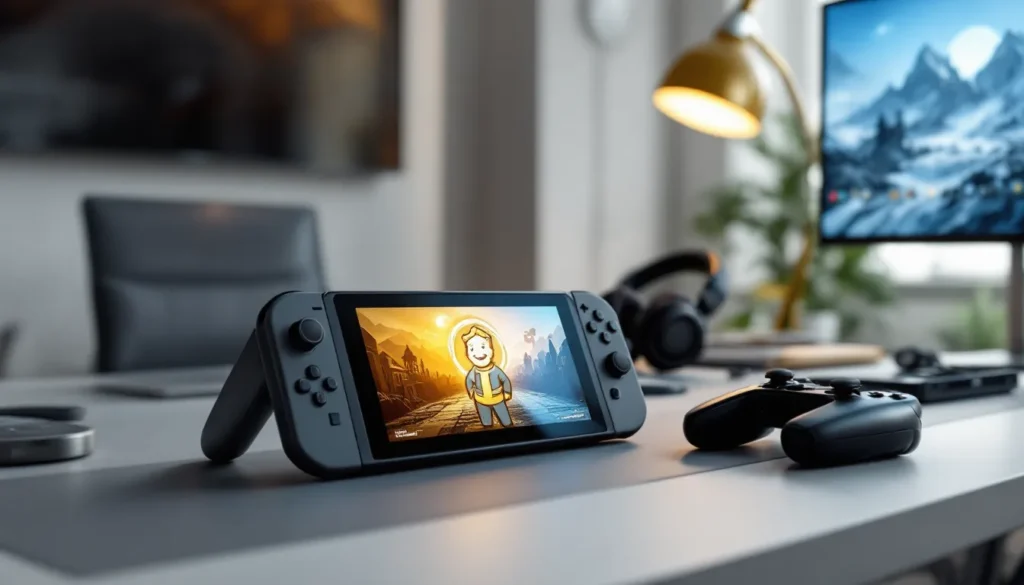
ToggleNintendo Switch fans have been asking the same question for years: when will Fallout finally land on the hybrid console? It’s March 2026, and even though the Switch’s massive install base and library of AAA ports, Bethesda’s post-apocalyptic RPG franchise remains conspicuously absent. No native ports, no cloud versions, and no official announcements beyond the free-to-play mobile spin-off.
The situation gets more complicated when you factor in Microsoft’s 2021 acquisition of Bethesda. Xbox exclusivity concerns, technical hurdles, and shifting publishing strategies have all played a role in keeping Vault-Tec off Nintendo’s platform. But that doesn’t mean hope is dead.
This guide breaks down the current state of Fallout on Switch, explores why the series hasn’t made the jump, examines realistic pathways for future ports, and offers alternatives for players desperate to experience the Wasteland on the go.
Key Takeaways
- Fallout Nintendo Switch availability remains limited to only Fallout Shelter, as Microsoft’s post-acquisition strategy prioritizes Xbox ecosystem exclusivity over third-party platform support.
- Technical hardware constraints make native Fallout 4 and 76 ports impossible on the Switch, though Fallout 3 and New Vegas are theoretically feasible if resources were allocated.
- Cloud gaming via Xbox Cloud Gaming is the most realistic near-term pathway for bringing Fallout to Switch, with proven precedents including Control, Resident Evil Village, and Kingdom Hearts.
- Steam Deck and handheld gaming PCs offer practical alternatives for portable Fallout gameplay, with Fallout: New Vegas running up to 4-5 hours on Steam Deck with optimized community mods.
- Switch owners can explore spiritual successors like Wasteland 3, The Outer Worlds alternatives, and The Witcher 3 for comparable open-world RPG experiences while waiting for Fallout on the platform.
- A next-generation Nintendo Switch or shift in Microsoft’s exclusivity policies could unlock Fallout ports by 2027-2030, potentially coinciding with Fallout 5’s development cycle.
The Current State of Fallout Games on Nintendo Switch
As of March 2026, Fallout Shelter is the only Fallout title officially available on Nintendo Switch. The free-to-play vault management sim launched on the eShop back in June 2018, offering a lightweight taste of the Fallout universe without the open-world exploration or deep RPG mechanics the series is known for.
Every mainline entry, Fallout 3, Fallout: New Vegas, Fallout 4, and Fallout 76, remains locked to PC, PlayStation, and Xbox platforms. There have been no official announcements, no trademark filings suggesting ports, and no leaks from credible sources pointing to imminent Switch releases.
This stands in stark contrast to other Bethesda franchises. The Elder Scrolls V: Skyrim came to Switch in November 2017, proving Bethesda was willing to support Nintendo’s hardware. Doom (2016) and Doom Eternal both made the jump via impressive optimization work by Panic Button. Even Wolfenstein II: The New Colossus squeezed onto the platform.
Yet Fallout, one of Bethesda’s most beloved IPs, has been completely sidelined. The absence feels deliberate rather than accidental, especially given the technical feasibility demonstrated by comparable ports. Switch owners looking for the full Wasteland experience are left with nothing but Shelter and speculation.
Why Fallout Hasn’t Come to Switch Yet
Technical Limitations and Hardware Constraints
The Nintendo Switch hardware, even with the OLED and potential “Switch 2” revisions, lags significantly behind the PlayStation 5 and Xbox Series X in raw processing power. The base Switch runs on a modified Nvidia Tegra X1 chip from 2015, which struggles with the demanding Creation Engine that powers Fallout 3, New Vegas, and Fallout 4.
Fallout 4, even on PC with high-end hardware, is notorious for performance issues in dense urban areas like downtown Boston. The game’s physics engine ties directly to framerate, meaning drops below 30 FPS can cause gameplay glitches. Achieving a stable 30 FPS on Switch, especially in docked mode, would require massive downgrades to draw distance, texture quality, NPC density, and environmental detail.
The Creation Engine’s reliance on CPU-heavy scripts for AI, physics, and quest logic creates additional bottlenecks. Switch’s ARM-based CPU simply can’t match the x86 architecture optimization that Fallout games were built around. Games like first-person shooters on Switch demonstrate the platform’s capabilities, but Fallout’s open-world complexity is a different beast.
Fallout 76, as a live-service multiplayer title, presents even steeper challenges. Constant server communication, real-time player interactions, and frequent content updates would strain the Switch’s wireless capabilities and internal storage. The game requires 80+ GB on other platforms, a tough ask for a console with 32GB base storage.
Bethesda’s Publishing Priorities and Microsoft Ownership
Microsoft’s $7.5 billion acquisition of ZeniMax Media (Bethesda’s parent company) closed in March 2021, fundamentally altering the publishing calculus. Phil Spencer, head of Xbox, has repeatedly stated that future Bethesda titles will be exclusive to “platforms where Game Pass exists”, meaning PC, Xbox consoles, and mobile via cloud.
This policy shift explains the absence of new Bethesda content on PlayStation 5 and Switch. While pre-existing contractual obligations allowed Deathloop and Ghostwire: Tokyo to hit PS5, those were exceptions rather than the rule. Microsoft’s strategy centers on using Bethesda’s marquee franchises to drive Game Pass subscriptions, not to support competing platforms.
From a resource allocation perspective, Bethesda Game Studios has been laser-focused on Starfield (2023) and the upcoming The Elder Scrolls VI. Porting older Fallout titles to Switch would require dedicated teams, QA testing, and ongoing support, resources Microsoft would rather invest in flagship projects that serve their ecosystem.
There’s also the factor of diminishing returns. Fallout 3 turned 18 years old in 2026, and New Vegas is nearly as ancient. Remastering these titles for Switch would demand significant engineering effort for games that lack the graphical wow-factor to drive sales. According to industry coverage on Nintendo Life, Nintendo fans have shown strong interest in classic RPGs, but Microsoft seems unconvinced the ROI justifies the port.
Cloud Gaming: The Most Viable Path Forward
How Cloud Gaming Could Bring Fallout to Switch
Cloud gaming bypasses the Switch’s hardware limitations entirely by streaming the game from remote servers. The Switch acts as a display and input device while the heavy lifting happens in a data center. This approach has already proven viable for demanding AAA titles that wouldn’t run natively.
For Fallout, a cloud implementation would stream the PC or Xbox Series X version directly to Switch. Players would need a stable internet connection, ideally 15+ Mbps for 1080p streaming at 60 FPS, and would purchase the game outright or access it via a subscription service. Input lag is the primary concern, but for a relatively slower-paced RPG like Fallout, the 30-50ms latency typical of good cloud setups is manageable.
Microsoft already operates Xbox Cloud Gaming (formerly xCloud), which includes Fallout 4 and Fallout 76 in its Game Pass Ultimate library. Technically, bringing this service to Switch would be straightforward, it’s already available on iOS, Android, and web browsers. The roadblock is business strategy, not technology.
Nintendo has historically been cautious about cloud gaming partnerships. They’d need to negotiate terms with Microsoft, decide on revenue splits, and ensure quality control. But as Switch hardware ages and the gap with competitors widens, cloud gaming may become the only way to keep the platform relevant for cutting-edge titles.
Precedents: Other AAA Games Successfully Ported via Cloud
Cloud gaming on Switch isn’t hypothetical, it’s already here. Control Ultimate Edition launched as a cloud-exclusive title on Switch in October 2020, streaming the full ray-traced experience to Nintendo’s handheld. Performance was generally solid over strong Wi-Fi, though occasional compression artifacts and input lag drew complaints.
Hitman 3, Resident Evil Village, and Kingdom Hearts have all received cloud-based Switch releases. Capcom in particular has embraced the model, bringing multiple Resident Evil titles to the platform this way. The games run at higher resolutions and framerates than native Switch ports could achieve, at the cost of requiring constant connectivity.
Most tellingly, Guardians of the Galaxy and Marvel’s Avengers both hit Switch via cloud streaming in Japan, demonstrating that even live-service titles can work in this framework. If Square Enix can stream Final Fantasy VII Remake to Switch, there’s no technical reason Microsoft couldn’t do the same with Fallout 4.
The business model varies. Some cloud games require full-price purchases (Control), while others offer free trials before committing. A hybrid approach, buy the game once, stream it to any device, would mirror what Nvidia’s GeForce Now offers. For troubleshooting persistent hardware issues, some users have needed to factory reset their Switch to clear cloud app data, but the technology itself has matured significantly.
Player reception has been mixed. Enthusiasts with strong internet connections praise the access to impossible ports. Critics point out you’re buying a license to stream rather than owning the game outright, and service shutdowns could render purchases unplayable. Still, for Switch owners without access to other platforms, cloud versions are better than nothing.
Which Fallout Games Could Realistically Come to Switch
Fallout Shelter: Already Available and Thriving
Fallout Shelter remains the only Fallout title playable on Switch natively. The vault management sim launched on June 10, 2018, and receives periodic updates with new rooms, dwellers, and events. It’s free-to-play with optional microtransactions for lunchboxes and premium currency.
Gameplay revolves around building and managing your own Vault-Tec shelter. Assign dwellers to resource production (power, food, water), send them into the Wasteland for loot, and defend against raider attacks and radroach infestations. The touch-screen interface translates perfectly to Switch’s portable mode, though docked play with Joy-Con feels clunkier.
Shelter isn’t a traditional Fallout experience, there’s no exploration, no dialogue trees, no moral choices. But it nails the series’ aesthetic and dark humor. It’s a solid time-killer for short sessions, and the price (free) makes it a no-brainer for curious fans.
Fallout 3 and New Vegas: Best Candidates for Native Ports
If any mainline Fallout games are coming to Switch natively, Fallout 3 and Fallout: New Vegas are the most plausible candidates. Both launched on Xbox 360 and PS3, hardware roughly comparable to the Switch in CPU and GPU capabilities. They’ve aged well enough that modern optimization could achieve stable performance.
Fallout 3 (2008) pioneered the modern 3D Fallout formula. Players explore the Capital Wasteland around post-nuclear Washington D.C., making choices that shape the region’s future. The game’s smaller world size and lower NPC density compared to Fallout 4 would ease the porting burden. Studios like Panic Button or Saber Interactive, which handled Doom and The Witcher 3 respectively, could realistically get it running at 30 FPS with moderate graphical downgrades.
Fallout: New Vegas (2010), developed by Obsidia Entertainment, is often considered the series’ narrative peak. Set in the Mojave Desert with multiple faction paths and meaningful skill checks, it’s beloved by RPG purists. Technically it’s built on the same engine as Fallout 3, making it equally feasible for Switch.
The biggest obstacle isn’t technical, it’s licensing and priority. Bethesda would need to greenlight the ports, allocate budget, and coordinate with a third-party studio. Given Microsoft’s current strategy, there’s little financial incentive unless Nintendo negotiated a co-marketing deal or Microsoft saw value in expanding brand awareness ahead of Fallout 5.
Still, if Xbox Cloud Gaming partnerships materialize or Microsoft softens its exclusivity stance, these two titles would be the logical testing ground. A bundled release, Fallout 3 and New Vegas Remastered Collection for Switch, could move serious units based on nostalgia and the platform’s portable appeal.
Fallout 4 and 76: Cloud-Only Possibilities
Fallout 4 (2015) and Fallout 76 (2018) are too demanding for native Switch ports. Fallout 4’s settlement-building system, dynamic weather, and dense Commonwealth map would crater performance. Even the PS4 and Xbox One struggled with framerate drops, and Switch’s hardware is several tiers below those consoles.
Fallout 76, as a persistent online game with frequent updates, would be a logistical nightmare. The base game plus DLC exceeds 100GB on modern platforms, and maintaining parity across versions would strain resources. The game also requires constant server connectivity, which overlaps poorly with Switch’s portable use case.
Cloud streaming is the only realistic path. Microsoft could offer both titles via Xbox Cloud Gaming on Switch, streaming the Series X versions at full quality. Players would need Game Pass Ultimate ($16.99/month as of March 2026) and solid internet, but the experience would be identical to playing on a high-end console.
Alternatively, standalone cloud purchases, similar to Control or Hitman 3, could let players buy once and stream indefinitely. This model would appeal to Switch-only owners who don’t want a subscription. Either way, native versions are off the table barring a miraculous next-gen Switch revision.
Reviews from outlets like Destructoid have noted that while cloud gaming works for slower-paced titles, twitchy shooters suffer from input lag. Fallout 4’s VATS system (paused targeting) mitigates this, making it better suited for streaming than fast-paced first-person shooters.
Alternative Ways to Play Fallout on the Go
Steam Deck and Other Handheld Gaming PCs
If Fallout on Switch remains a fantasy, the Steam Deck offers a legitimate alternative. Valve’s handheld gaming PC launched in February 2022 and runs the full Steam library natively. Fallout 3, New Vegas, 4, and 76 all work on Deck, with community-tweaked settings to optimize battery life and performance.
Fallout 4 runs at a locked 40 FPS on Steam Deck with medium settings, a noticeable upgrade over the 30 FPS (or worse) on base PS4/Xbox One. Battery life sits around 2-3 hours depending on settings, which is acceptable for a game this demanding. Modding support is intact via Nexus Mods, and cloud saves sync seamlessly with your PC.
Fallout: New Vegas is particularly well-suited to Deck. The older engine runs efficiently, stretching battery life to 4-5 hours. Community mods like Viva New Vegas curate bug fixes and quality-of-life improvements, making the Deck arguably the definitive portable way to play Obsidian’s masterpiece.
Other handheld PCs like the ASUS ROG Ally, Lenovo Legion Go, and GPD Win 4 offer similar or better specs, though at higher price points ($599-$799). All run Windows natively, meaning Game Pass integration for Fallout 76 and full mod support across the board.
The downside? Cost. A Steam Deck starts at $399, double the price of a Switch OLED. Battery life lags behind Nintendo’s hardware, and the device is bulkier and heavier. But for dedicated Fallout fans, it’s the only way to take the full experience on the road without streaming compromises.
Xbox Cloud Gaming on Mobile Devices
Microsoft’s Xbox Cloud Gaming service brings Fallout 4 and Fallout 76 to smartphones and tablets via Game Pass Ultimate. Streaming quality has improved dramatically since the service launched in beta, now offering 1080p/60 FPS on strong connections.
Players can use touch controls (awkward for a game like Fallout) or pair a Bluetooth controller like the Xbox Wireless Controller or Backbone One. The experience mirrors console play, with full achievement support, cross-saves, and access to mods via the in-game Bethesda.net integration.
Latency is manageable for Fallout’s slower combat pace. VATS targeting pauses action, and exploration doesn’t demand frame-perfect inputs. PvP in Fallout 76 suffers more noticeably, but the game’s co-op PvE focus makes this a minor issue.
The catch is data consumption. Streaming at 1080p burns through roughly 3GB per hour, making unlimited data plans or Wi-Fi essential. Input lag spikes on congested networks, and some users report occasional disconnects during peak hours. According to coverage on GameSpot, Microsoft has been steadily upgrading server infrastructure to address these concerns, with mixed results depending on region.
For players with existing Game Pass Ultimate subscriptions, this is the easiest path to portable Fallout. No additional hardware purchase required, just install the Xbox app on iOS or Android and start streaming. It’s not as seamless as a native Switch port, but it works.
What Switch Gamers Can Play Instead
Post-Apocalyptic Games Available on Switch
While Fallout remains absent, Switch has accumulated a respectable library of post-apocalyptic titles that scratch similar itches. Metro 2033 Redux and Metro: Last Light Redux both made the jump in February 2020, offering bleak underground survival with heavy atmosphere. Performance is rough, expect sub-30 FPS in intense firefights, but the dread-soaked exploration and resource scarcity echo Fallout’s tone.
Wasteland 2: Director’s Cut and Wasteland 3 provide turn-based tactical RPG gameplay in nuclear wastelands. Developed by inXile Entertainment (founded by Fallout 1 and 2 creators), these titles emphasize branching narratives and squad management. Wasteland 3 in particular earned strong reviews for its dark humor and meaningful choices, making it the closest spiritual successor to classic Fallout on Switch.
The Outer Worlds almost made the cut, but remains inexplicably absent from Switch even though PS4 and Xbox One releases. Obsidian’s space-faring RPG shares DNA with New Vegas, same developer, similar dialogue systems, comparable moral ambiguity. Its absence stings given the technical feasibility.
Mad Max could theoretically run on Switch but hasn’t been ported. Rage 2 is similarly MIA. The selection isn’t barren, but it’s far from robust. For more variety in action-heavy titles, Switch owners might explore options in other first-person shooter games available on the platform.
RPGs with Similar Gameplay Mechanics
If post-apocalyptic settings aren’t the priority, Switch offers plenty of deep RPGs with Fallout-adjacent mechanics. The Elder Scrolls V: Skyrim is the obvious choice, same developer, same Creation Engine, same open-world exploration focus. It’s showing its age (originally a 2011 title), but mods via Bethesda.net and portable play make the Switch version appealing.
The Witcher 3: Wild Hunt delivers massive open-world exploration, branching questlines, and meaningful choices. Saber Interactive’s port is a technical marvel, maintaining playability even though serious downgrades. If you can tolerate 540p resolution in handheld mode and frequent frame drops, it’s arguably the best Western RPG available on Switch.
Divinity: Original Sin 2 trades real-time combat for turn-based tactics but matches Fallout’s depth in character builds and narrative branching. The Switch port runs smoothly and includes cross-save with PC/console versions. It’s a 100+ hour commitment with complex systems, ideal for players who love Fallout’s RPG mechanics more than its shooter elements.
Dragon’s Dogma: Dark Arisen offers action-RPG combat in a dark fantasy world. While tonally different from Fallout, the emphasis on experimentation (climbing monsters, environmental interactions) and party customization appeals to similar sensibilities. The Switch port is solid, though dated visuals betray the game’s PS3-era origins.
For players who miss Fallout’s quirky humor and choice-driven narratives, Disco Elysium: The Final Cut is essential. It’s entirely dialogue-based with no combat, but the skill-check systems and branching paths rival New Vegas in depth. The Switch port launched in October 2021 and runs well even though occasional load time hiccups. Some players have reported minor technical issues requiring occasional factory resets, but these are rare.
Community Demand and Future Outlook
Nintendo and Bethesda fan communities have been vocal about wanting Fallout on Switch since the console launched in 2017. Reddit threads on r/NintendoSwitch and r/Fallout regularly surface petitions and wishful speculation. Twitter campaigns using hashtags like #FalloutForSwitch periodically trend, though they’ve failed to move the needle on official announcements.
The success of Skyrim on Switch, over 1 million units sold in its first year according to industry estimates, proved there’s an audience for Bethesda RPGs on Nintendo hardware. Yet that hasn’t translated to follow-through on Fallout. Microsoft’s ownership is the likely culprit: pre-acquisition Bethesda was willing to experiment with Switch support, but post-2021 strategy prioritizes Xbox ecosystem lock-in.
Looking ahead, the rumored Nintendo Switch 2 (or whatever Nintendo names its next-gen console) could shift the calculation. If the new hardware closes the performance gap with PS5/Series X, native ports of Fallout 4 or even remasters of older titles become more feasible. But that’s speculative, Nintendo hasn’t officially announced successor hardware as of March 2026, though leaks suggest a late 2026 or early 2027 launch window.
Cloud gaming remains the most realistic near-term path. If Microsoft and Nintendo can negotiate a partnership to bring Xbox Cloud Gaming to Switch, similar to how EA Play and Ubisoft+ integrated with Game Pass, Fallout 4 and 76 would instantly become accessible. Precedent exists: Nintendo allowed cloud versions of Control, Hitman, and Kingdom Hearts even though their competitive drawbacks.
The wildcard is Fallout 5. Bethesda confirmed the game is in early development during a 2022 investor call, but with The Elder Scrolls VI slated first, Fallout 5 likely won’t hit shelves until 2028-2030 at the earliest. By then, Switch’s successor will be the active platform, and Microsoft’s strategy may have evolved. A simultaneous multi-platform launch isn’t impossible if Microsoft views Fallout 5 as a system-seller that benefits from maximum reach rather than exclusivity.
For now, though, Switch owners shouldn’t hold their breath. Demand is clear, technical pathways exist, but business realities and corporate strategies keep Vault Boy locked behind Xbox walls.
Conclusion
Fallout on Nintendo Switch remains frustratingly out of reach in 2026. Only Fallout Shelter offers a taste of the series, while mainline entries stay exclusive to platforms Microsoft controls. Technical limitations explain part of the absence, Switch hardware can’t run Fallout 4 or 76 natively, but corporate strategy is the real barrier. Microsoft prioritizes Game Pass and Xbox ecosystem growth over third-party platform support.
Cloud gaming presents the most viable compromise. Precedents exist with titles like Control and Resident Evil Village, and Xbox Cloud Gaming could theoretically stream Fallout to Switch tomorrow if business terms aligned. Native ports of Fallout 3 and New Vegas are technically feasible but require resources and motivation Microsoft hasn’t shown.
Until then, alternatives exist. Steam Deck and handheld gaming PCs offer full Fallout experiences on the go. Xbox Cloud Gaming works on mobile devices for Game Pass subscribers. Switch owners can explore spiritual successors like Wasteland 3 or jump into Skyrim and The Witcher 3 for comparable open-world RPG depth.
The community wants Fallout on Switch. The technology enables it. But in March 2026, the Wasteland stays locked to Xbox, PlayStation, and PC. Maybe Nintendo’s next console will change the equation. Maybe Microsoft will soften exclusivity policies. For now, though, Switch fans are left scavenging for alternatives in the nuclear ruins of what could have been.